Q1. Identical twins are
Solution
Identical twins are formed by the splitting up of a single zygote and hence are homozygotic.
Q2. Teenagers experience depression due to
Solution
Teenagers undergo various hormonal changes due to which they may experience depression.
Q3. How many hormones are secreted by pituitary gland?
Solution
The pituitary gland secretes nine hormones which regulate homoeostasis and the secretion of other hormones.
Q4. Pimples appear because of inflammation of oil glands
in the skin and disappear after the age of 20.
Solution
Acne tends to disappear in the early twenties.
Q5. Release of the ovum is achieved by
Solution
The release of the ovum from a mature follicle is known as ovulation.
Q6. The endocrine part of the pancreas is called
Solution
The endocrine part of the pancreas is called the islets of Langerhans.
Q7. Which of the following is an example of a drug?
Solution
Heroin, cocaine, paracetamol and penicillin are common examples of drugs which teenagers tend to get addicted to.
Q8. Girls attain puberty at
the age of 12-14 years.
Solution
Girls attain puberty at the age of 10-13 years,
while boys reach puberty at the age of 12-14 years.
Q9. Give the
functions of
GH
GSH
ICSH
Solution
Functions of
GH (Growth hormone) -
Promotes the growth of bones and tissues
GSH (Gonadotropic-stimulating hormone) - Stimulates
gonads, testes and ovaries to secrete sex hormones
ICSH (Interstitial
cell-stimulating hormone) - Stimulates
the interstitial cells or Leydig cells of the
testes to produce the male sex hormone testosterone
Q10. The ovulatory phase lasts
from the 15th to the 28th day of the menstrual cycle.
Solution
The ovulatory phase lasts
from the 13th to the 14th day of the menstrual cycle.
Q11. (a) Which hormones control metamorphosis in insects and frogs?(b) Which glands are represented by A, B, C and D in the below figure? 
Solution
(a) Metamorphosis in insects is controlled by insect hormones. In a frog, it is controlled by thyroxine, the hormone produced by thyroid. (b) A- Pituitary gland B- Thyroid gland C- Adrenal gland D- Pancreas
Q12. ACTH stands for
Solution
ACTH stands for adrenocorticotropic-stimulating hormone. It controls the secretions of the adrenal cortex, aldosterone and cortisone.
Q13. Why endocrine glands are called ductless glands?
Solution
Endocrine glands release hormones directly into the bloodstream. So, they are also termed ductless glands.
Q14. The shoulder girdle is also known as the
Solution
The shoulder girdle is also known as the pectoral girdle.
Q15. The ovulatory phase lasts
from the 15th to the 28th day of the menstrual cycle.
Solution
The ovulatory phase lasts
from the 13th to the 14th day of the menstrual cycle.
Q16. Once in
every 28-30 days, a single ovum matures and is released by both the ovaries.
Solution
False. Once
in every 28-30 days, a single ovum matures and is released by one of the two
ovaries.
Q17. Where are the adrenal glands located? Name the hormone secreted by adrenal glands. Write its two important functions.
Solution
Adrenal glands are located on the top of the kidneys. Adrenaline hormone is secreted by adrenal glands. Functions: (i) Adrenaline hormone maintains the correct salt balance in the blood. (ii) It helps during stress or emergency situations by regulating heart beat, breathing rate, blood pressure etc.
Q18. State two changes which take place in boys at
puberty.
Solution
Testes
mature and start producing sperms
Pectoral
girdle (shoulder girdle) grows
Hair
growth in the pubic region
Development
of moustache and beard
Development
of deep voice
(ANY TWO)
Q19. Teenagers prefer to talk to
Solution
Teenagers prefer to talk to their peers who are of the same age.
Q20. Teenagers tend to think a lot due to
Solution
During puberty, the brain develops further, and hence, individuals tend to think a lot as the brain activity increases.
Q21. The egg gets implanted in the uterine walls prior to
fertilisation.
Solution
Only a fertilised egg cell gets implanted in the
uterine wall.
Q22. Name one hormone secreted by: (a) Adrenal gland (b) Pituitary gland (c) Pancreas (d) Thyroid gland
Solution
(a) Adrenaline(b) Growth hormone(c) Insulin(d) Thyroxine
Q23. Acne tends to disappear
Solution
Acne tends to disappear in the early twenties.
Q24. Girls have a low-pitched voice, and hence, they
sound shrill.
Solution
Girls have a high-pitched voice.
Q25. When the ovum is not fertilised, the thick lining of
the uterus is no longer required.
Solution
True
Q26. The
pituitary gland secretes nine hormones.
Solution
True
Q27. What changes
occur in the female body when the egg is fertilised by a sperm?
Solution
The thick lining of the uterine walls is
maintained to receive the fertilised egg.
The body continues to secrete sex hormones to
sustain the pregnancy.
The fertilised egg divides and enlarges and
gets implanted in the uterine wall.
Q28. Depression in adolescents is mainly caused by
Solution
Depression in adolescents is mainly caused by hormonal changes in the body.
Q29. Girls attain puberty at
the age of 12-14 years.
Solution
Girls attain puberty at the age of 10-13 years,
while boys reach puberty at the age of 12-14 years.
Q30. Acne is caused by the inflammation of the
Solution
Acne is caused by the inflammation of the oil glands.
Q31. Hormones which regulate the production of sperms are
secreted by the thyroid gland.
Solution
Hormones which
regulate the production of sperms are secreted by the pituitary gland.
Q32. The egg gets implanted in the uterine walls prior to
fertilisation.
Solution
Only a fertilised egg cell gets implanted in the
uterine wall.
Q33. The pituitary gland secretes nine hormones which
regulate homeostasis and the secretion of other hormones.
Solution
True
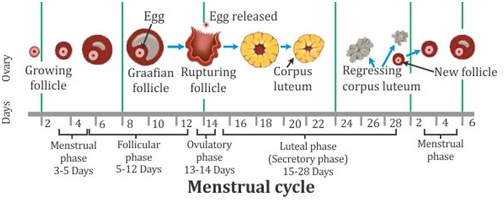
Q34. Diagrammatically
explain the events of the menstrual cycle.
Solution
Q35. Aldosterone regulates the metabolism of
Solution
Aldosterone regulates the metabolism of minerals, specifically sodium (Na+)and potassium (K+) ions.
Q36. Write any two ways how the HIV virus can be transmitted from an infected person to a healthy person.
Solution
(i) HIV virus can pass on to a normal person from an infected person by sharing the syringes used for injecting drugs. (ii) It can also be transmitted to an infant from the infected mother through her milk. (iii) Another way of transmission is through sexual contact with a person infected with HIV.
(Any 2)
Q37. Children between the ages of 11 and 19 years are
known as adults.
Solution
Children
between the ages of 11 and 19 years are known as adolescents.
Q38. Adolescence begins at the age of
Solution
On average, girls begin puberty at ages 10–11; boys at ages 11–12.
Q39. Armpit hair develops only in males.
Solution
Armpit hair develops in both females and males.
Q40. During which days of the cycle, the luteal phase of the menstrual cycle can be encountered?
Solution
The luteal phase begins on the 15th day and lasts till the 28th day of the menstrual cycle.
Q41. AIDS can be transmitted from mother to child through
Solution
AIDS can be transmitted from mother to child through blood transfusion, mixing of blood as well as through breastfeeding.
Q42. Name the
gland which is responsible for the secretion of calcitonin
and state its function.
Solution
Calcitonin is secreted by the thyroid
gland, and it regulates the levels of calcium and phosphate in the blood.
Q43. The
reproductive phase in females lasts until the age of 55-60 years.
Solution
False. The
reproductive phase in females lasts until the age of 45-50 years.
Q44. Girls have a low-pitched voice, and hence, they
sound shrill.
Solution
Girls have a high-pitched voice.
Q45. Discuss how the process of menstruation occurs in females.
Solution
Once in about 28 to 30 days, one ovum matures and is released by one of the ovaries. During this period, the wall of the uterus becomes thick so as to receive the egg, in case it is fertilised. If fertilisation does not occur, the released egg, and the thickened lining of the uterus along with its blood vessels are shed off. This causes bleeding in women which is called menstruation.
Q46. Pimples appear because of inflammation of oil glands
in the skin and disappear after the age of 20.
Solution
Acne tends to disappear in the early twenties.
Q47. At puberty, there is an increase in the secretion of
Solution
At puberty, there is an increase in the secretion of both sweat glands and oil glands.
Q48. Which disease is this child suffering from? Write its cause.

Solution
The child is suffering from goitre, an enlargement of the thyroid gland. It is caused due to deficiency in thyroxine hormone produced by the thyroid gland.
Q49. List the harmful effects of drug addiction.
Solution
Harmful effects of
drugs:
Drugs are addictive. If you
take drugs once, you feel like taking them again and again.
Drug addicts become irritable
and lose interest in studies or jobs.
Drugs cause physical harm to
the body. They can damage the liver, brain, lungs and kidneys.
Drugs may even cause accidents
due to a confused state of mind.
Sharing of syringes for
injecting drugs spreads AIDS among drug addicts.
Q50. List the benefits of exercise during
adolescence.
Solution
Benefits of regular exercise:
Keeps the body fit
Improves mental health
Protects the person from heart
disease, high blood pressure, diabetes and obesity
Builds and maintains healthy
muscles, bones and joints
Increases efficiency in
studies, sports and work
Improves the general sense of
well-being and makes a person feel happy
Q51. Which components in the blood regulate calcitonin?
Solution
Calcitonin regulates calcium and phosphate levels in the blood.
Q52. The pituitary gland secretes nine hormones which
regulate homeostasis and the secretion of other hormones.
Solution
True
Q53. Hormones which regulate the production of sperms are
secreted by the thyroid gland.
Solution
Hormones
which regulate the production of sperms are secreted by the pituitary gland.
Q54. Why does the diet of adolescents need:(a) Iodine(b) Calcium(c) Iron
Solution
(a) Iodine helps to prevent thyroid gland related diseases. (b) Due to an increase in skeletal mass, the adolescent diet should include calcium. Calcium intake needs to be increased to prevent osteoporosis in later life. (c) To compensate for iron deficiency due to muscle spurt in boys and menstruation as well as muscle spurt in girls, the diet of adolescents need iron rich diet. Lack of iron in the diet results in anemia.
Q55. Give reasons:(a) It is highly essential for teenagers to take a bath everyday.(b) All teenagers should walk and play in fresh air.
Solution
(a) It is very essential for teenagers to bathe everyday because the increased activity of sweat glands sometimes makes the body smelly.(b) Walking and playing in fresh air keeps the body fit and healthy.
Q56. What is the
fate of the reproductive cycle in females if the ovum is not fertilised by a
sperm?
Solution
If a sperm is not available at the time of
ovulation, then fertilisation does not occur.
As the ovum is not fertilised, the thick lining
of the uterus is no longer required.
The unfertilised egg dies within a day and the
lining of the uterus also breaks down.
The egg, the thickened lining of the uterus
along with blood vessels and other uterine tissues are shed off as blood
and mucus.
This results in bleeding from the vagina in women.
This is called menstruation.
Q57. Why do boys get a characteristic voice after
puberty?
Solution
With the onset of puberty, the
hormonal changes in the body cause the larynx or the voice box to enlarge,
which gives boys a characteristic deep or low-pitched voice.
Q58. Both the ovaries in females release an egg cell each
month.
Solution
Only one ovary in the female releases an egg cell
each month.
Q59. The gonadotropin-releasing
hormone stimulates the testes in males and the ovaries in females to release
testosterone and oestrogen, respectively.
Solution
True
Q60. How are acne and pimples caused?
Solution
With the onset of puberty, there is an increase
in the secretion of oil and sweat glands. When there is excessive secretion
of these body fluids, the oil and sweat along with cellular debris collect in
the glands. The growth of bacteria in these blocked pores results in the
formation of acne and pimples.
Q61. Answer the following: (i) Thread like structures present in the nucleus and carrying genetic information.(ii) Number of chromosomes in every human.(iii) Number of chromosomes in gametes.(iv) Number of sex chromosomes.(v) The sex chromosomes in male.(vi) The sex chromosomes in female.
Solution
(i) Chromosomes(ii) 46(iii) 23(iv) 2(v) XY(vi) XX
Q62. Both the ovaries in females release an egg cell each
month.
Solution
Only one ovary in the female releases an egg cell
each month.
Q63. State the
disease caused by the deficiency of
Growth hormone
Thyroxine
Insulin
Solution
Deficiency diseases:
Growth hormone - Dwarfism
Thyroxine - Goitre
Insulin - Diabetes
Q64. Vijaya is confused between the terms
menarche and menopause. Help her understand the difference between them. What
is the approximate age for menarche and menopause?
Solution
The first menstrual cycle which begins at
puberty is known as menarche, whereas the end of the menstrual cycle or
reproductive phase is known as menopause.
Menarche occurs at 13 years (approx.), and
menopause occurs at 45-50 years.
Q65. Give reasons:(i) Adolescents are also called teenagers.(ii) During puberty, there is sudden increase in height.(iii) In some adolescent boys, the voice become hoarse.
Solution
(i) The period of adolescence covers the 'teens' i.e. 13 to 18 or 19 years of age. Hence adolescents are also called teenagers.(ii) During puberty, the long bones i.e. the bones of the arms and the legs elongate and make a person tall. This results in sudden increase in height.(iii) Sometimes in adolescent boys, the muscles of the growing voice box go out of control and the voice becomes hoarse.
Q66. What do you understand by the following:(a) Adam's apple(b) Hormones(c) Puberty
Solution
(a) The growing voice box in boys seen as a protruding part of the throat is called Adam's apple.(b) Hormones are chemical substances secreted by endocrine glands.(c) The period during which adolescents reach sexual maturity and become capable of reproduction.
Q67. Write the function of:(i) Insulin(ii) Growth hormone
Solution
(i) Insulin controls the metabolism of sugar in our body.(ii) Growth hormone is necessary for the normal growth of a person.
Q68. Why is the
mother not to blame for the sex of a newborn?
Solution
The sex of a
newborn is determined by the sex chromosomes present in the cells. If the sex
chromosomes are in the pair of XX, then the child will be a female. If the
sex chromosomes are XY, then the child will be a male.
The gametes
produced by the mother are always X, while those produced by the father is X
and Y. If the sperm carrying the X chromosome fuses with the egg cell, the
child will be a female and if the sperm carrying the Y chromosome fuses with
the egg cell, the child will be a male. So, the father decides the sex of the
newborn and not the mother.
Q69. Children between the ages of 11 and 19 years are
known as adults.
Solution
Children
between the ages of 11 and 19 years are known as adolescents.
Q70. Armpit hair develops only in males.
Solution
Armpit hair develops in both females and males.
Q71. What are the different stages of life based on the
age of an individual?
Solution
Life stages:
Infant - Children between 1
month and 1 year of age
Toddler - Children between the
ages of 1 and 4 years
Adolescent - Children between
the ages of 11 and 19 years
Adulthood - Begins from the
age of 18 years onwards
Q72. List the
functions of sex hormones.
Solution
Regulate spermatogenesis or oogenesis
Regulate the structural development,
maintenance and functions of accessory sex organs
Help to develop secondary sexual characters at
the proper age
Responsible for changes in the face, body
structure and appearance; development of mammary glands; pitch of the
voice; vigilant behaviour and sentimental behaviour
Q73. Which sex organs are present in females since
birth?
Solution
Ovaries
Oviducts
Uterus
Vagina
Q74. Why pituitary gland is called as master gland?
Solution
Pituitary gland is called as the master gland because it secretes hormones that control the functioning of other glands.
Q75. What do you understand by adolescence? When does it take place?
Solution
The period of life, when the body undergoes changes, leading to reproductive maturity, is called adolescence. Adolescence begins around the age of eleven and lasts upto 18 or 19 years of age.
Comments
Post a Comment